When I think about American automotive history, certain names just jump out at me. And Oldsmobile, for me, is right up there. It wasn't just another car brand; it was a bona fide pioneer, a brand that actually shaped how we think about cars, driving, and even how they're built. It had a remarkably long run, more than a century, actually, from its inception by Ransom E. Olds in 1897 until its eventual discontinuation in 2004. It’s quite a story, full of innovation, market dominance, and ultimately, a poignant farewell.
The Genesis of an American Icon: Ransom E. Olds' Vision
So, where did it all begin? It started with a man named Ransom E. Olds, a true visionary. He established the Olds Motor Vehicle Company in Lansing, Michigan, way back in 1897. Can you imagine the automotive landscape then? It was practically non-existent! Ransom Olds wasn't just building cars; he was helping to define what a car even was. His early efforts led to the Curved Dash Olds, which, I'd say, was a monumental achievement for its time.
The Curved Dash Olds: A Game Changer
The Curved Dash Oldsmobile, introduced in 1901, wasn't the first car, not by a long shot, but it was arguably the first mass-produced automobile in America. Before Henry Ford's Model T, it was the Curved Dash that really showed the world the potential of motorized transport for the everyday person. It was simple, relatively affordable, and reliable enough for the roads of the early 20th century. I mean, think about it: this car helped kickstart the entire American automotive industry. It even inspired a popular song, 'In My Merry Oldsmobile'—how cool is that?
Innovations That Shaped the Auto Industry
Oldsmobile wasn't content just to produce cars; it consistently pushed boundaries. They introduced quite a few significant 'firsts' that, I think, often get overlooked. For instance, Oldsmobile was among the first to experiment with the assembly line long before Ford perfected it. Ransom Olds himself utilized a stationary assembly line and subcontractors to speed up production of the Curved Dash, a concept that laid groundwork for what was to come.
Later on, under General Motors, Oldsmobile continued its innovative streak. In 1939, it introduced the Hydra-Matic, the world's first mass-produced fully automatic transmission. This was a huge deal! It literally changed driving forever, making cars much more accessible and easier to operate for millions of people. I can only imagine what a revelation that must have been for drivers who were used to wrestling with manual gearboxes.
Joining the General Motors Family: Finding Its Place
In 1908, Oldsmobile became one of the original divisions of General Motors, acquired by William C. Durant. This move positioned Oldsmobile as a step-up brand within the GM hierarchy, sitting above Chevrolet and Pontiac, but generally below Buick and Cadillac. This strategy allowed GM to cater to a broad range of consumers, and Oldsmobile carved out a niche for itself as a brand known for its engineering prowess and a touch of upscale appeal without being overly ostentatious. It was a smart play, I believe, offering something for everyone.
The Post-War Powerhouse: Rocket V8 and Futuristic Styling
The post-World War II era really saw Oldsmobile hit its stride. America was booming, and people wanted powerful, stylish cars. Oldsmobile delivered in spades, especially with the introduction of its 'Rocket' V8 engine in 1949. This engine was a sensation! It combined overhead valves and a relatively compact design, offering a fantastic balance of power and efficiency for its time. It quickly became the benchmark for performance, and you could hear people talking about the 'Rocket' engine everywhere.
Alongside that raw power, Oldsmobile embraced what they called 'Futuramic' styling. Cars like the 88 and 98 models were sleek, modern, and just exuded a sense of optimism and progress. They weren't just cars; they were symbols of a forward-looking America. I mean, who wouldn't want to cruise around in one of those, feeling like you were driving into the future?
Muscle Cars, Luxury, and Unconventional Engineering
The 1960s and early 70s were an incredibly exciting time for American cars, and Oldsmobile was right in the thick of it. This period gave us some truly iconic models:
- The 442: This was Oldsmobile's entry into the muscle car wars, and it was a formidable one. Originally an option package for the Cutlass, the 442 (standing for 4-barrel carburetor, 4-speed transmission, and dual exhausts) quickly became a legend. It wasn't just brute force; it offered a sophisticated blend of performance and Oldsmobile's traditional refinement. You really felt like you were getting a premium muscle car.
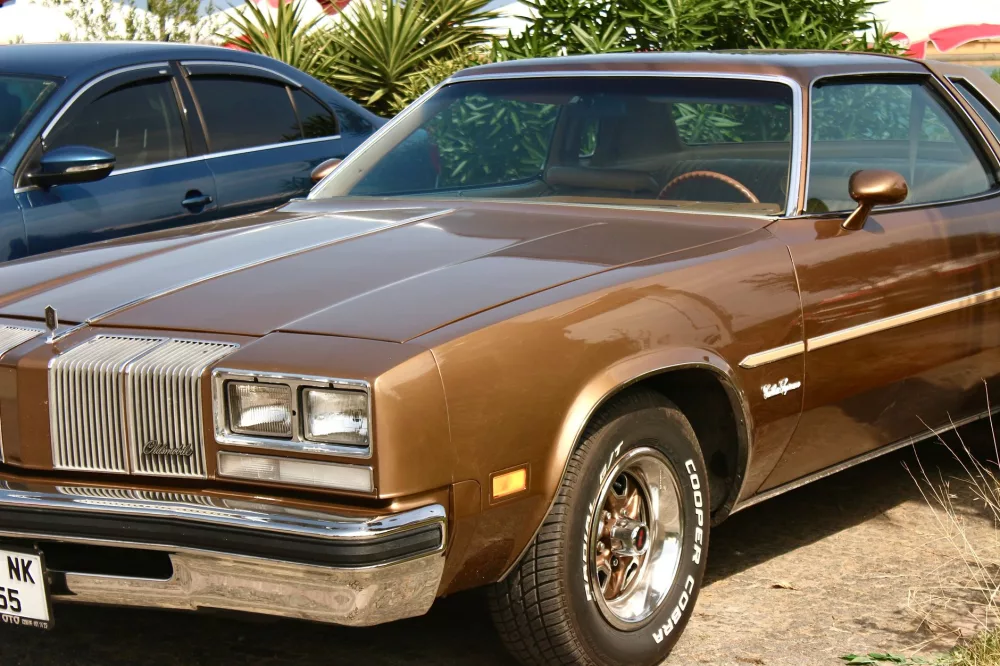
- The Cutlass: This model, particularly the Cutlass Supreme, became one of the best-selling cars in America for a good reason. It offered style, comfort, and a wide range of engine options, appealing to a massive demographic. I remember seeing these everywhere; they were just that popular.
- The Toronado: This car was truly groundbreaking. Introduced in 1966, the Toronado was the first American production car since the Cord of the 1930s to feature front-wheel drive, and it did so in a full-size luxury coupe! This was a bold engineering move, showcasing Oldsmobile's willingness to experiment and innovate. Its futuristic styling, hidden headlights, and powerful V8 engine made it a true standout. It was just so different from anything else on the road, a real statement piece.
Struggles and Shifting Sands: The Challenges of the Later Decades
Despite its rich history of innovation, the later decades were tough for Oldsmobile. The oil crises of the 1970s shifted consumer preferences towards smaller, more fuel-efficient cars, a trend Oldsmobile, like many American brands, struggled to adapt to quickly enough. GM's strategy of 'badge engineering' also started to dilute Oldsmobile's unique identity. Many Oldsmobile models began to look and feel too much like their Chevrolet, Pontiac, or Buick counterparts, losing that distinct 'Olds' character that customers had come to appreciate.
By the 1980s and 90s, the brand seemed to lose its way. While models like the Cutlass Ciera sold well, they weren't exactly inspiring. Oldsmobile tried to reinvent itself with models like the Aurora, which was a genuinely good car with unique styling and a powerful V8 engine, but it was perhaps too little, too late. The market had changed, and Oldsmobile's place in it had become increasingly unclear. It was a confusing time, I'd say, for a brand that once stood so clearly for innovation and power.
The Farewell: Why Oldsmobile Said Goodbye
In December 2000, General Motors made the difficult announcement: Oldsmobile would be phased out. It was a decision driven by declining sales, a muddled brand image, and GM's efforts to streamline its numerous divisions. The final Oldsmobile, an Alero GLS sedan, rolled off the assembly line in Lansing, Michigan, on April 29, 2004. It was a sad day for many, marking the end of America's oldest continuously operating automobile brand. I can only imagine the feelings of the workers and enthusiasts who watched that last car leave the factory.
A Lasting Impression: Oldsmobile's Enduring Legacy
Even though Oldsmobile is no longer with us, its impact on the automotive world is undeniable. From the first mass-produced American car to pioneering automatic transmissions and front-wheel drive in full-size vehicles, Oldsmobile consistently pushed the envelope. Its vehicles, like the Rocket 88, 442, and Toronado, are celebrated classics today, cherished by enthusiasts who appreciate their unique blend of style, power, and engineering. When I see an old Olds on the road, I don't just see a car; I see a piece of history, a reminder of a brand that truly helped shape the way we drive and the cars we love.